

Quick Answer:
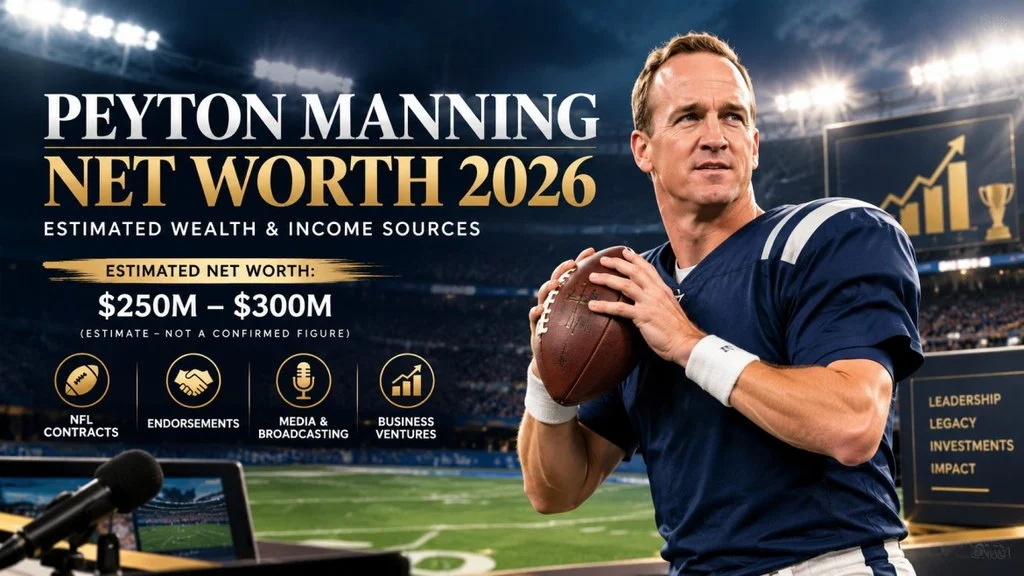
Peyton Manning’s net worth in 2026 is estimated at approximately $250 million to $300 million, based on his NFL career earnings, endorsement deals, business ventures, and media work, although his complete personal finances have not been publicly verified.
Peyton Manning is one of the most successful quarterbacks in NFL history, with a career that combined elite performance, major contracts, championship victories, and long-lasting commercial appeal. His financial success did not end when he retired from professional football. Advertising partnerships, business interests, and television appearances have helped keep him relevant beyond the playing field.
Interest in Peyton Manning net worth remains strong in 2026 because his career offers a useful example of how elite athletes can turn professional earnings into long-term wealth. However, reported NFL salaries and endorsement deals do not reveal his full financial position. Taxes, agent fees, investment decisions, business expenses, and personal liabilities can all affect the amount of wealth he retains. Any net worth figure should therefore be treated as an estimate, not a confirmed financial statement.
Bio Data Table
| Field | Details |
|---|---|
| Full Name | Peyton Williams Manning |
| Date of Birth | March 24, 1976 |
| Age as of 2026 | 50 years old |
| Place of Birth | New Orleans, Louisiana, United States |
| Nationality | American |
| Height | 6 feet 5 inches |
| Weight | Approximately 230 pounds during his NFL career; current weight not publicly verified |
| Health Conditions | Underwent multiple neck surgeries during his playing career; a complete current medical profile is not publicly verified |
| Religion | Not publicly verified |
| Education | University of Tennessee |
| Sports / Profession / Industry | Former NFL quarterback, sports media personality, businessman |
| Zodiac Sign | Aries |
| Marriage / Relationship Status | Married to Ashley Thompson |
| Children | Two children |
| Net Worth | Estimated at $250 million to $300 million in 2026; not officially confirmed |
| Social Media Accounts | Public presence through official and professional channels; account details should be checked against verified profiles |
| Still Alive | Yes |
| Famous For | Playing for the Indianapolis Colts and Denver Broncos, winning two Super Bowls, and earning five NFL MVP awards |
Peyton Manning Net Worth 2026 Estimate
Peyton Manning’s estimated net worth of $250 million to $300 million in 2026 reflects three major parts of his career: NFL compensation, endorsement income, and business and media activities after retirement. Some published estimates place his wealth near $250 million, while others report figures closer to $300 million. Neither amount should be treated as an officially confirmed personal balance sheet.
NFL Career Earnings
Manning played 18 seasons in the NFL, representing the Indianapolis Colts and Denver Broncos. His contracts included salaries, signing bonuses, roster bonuses, and other forms of compensation. Public career-earnings estimates place his NFL salary and bonuses at roughly $249 million, although exact totals can vary according to which compensation categories are counted.
These earnings helped establish his financial foundation, but they do not equal his current wealth. Taxes, agent commissions, professional expenses, living costs, and investment decisions affect how much of that money remains available over time.
Endorsement Income
Manning’s recognizable personality and reputation as a quarterback made him a valuable commercial partner. His advertising work has included campaigns associated with brands such as Nationwide and other national companies. Sports endorsements can generate substantial income because brands pay athletes to help promote products and build consumer recognition.
The amount Manning earns from each current partnership is not publicly verified. Reported endorsement earnings from earlier years provide context for his commercial appeal, but they should not be treated as proof of his current annual income.
Business and Media Interests
Manning’s financial activities continued after he left the NFL. He founded Omaha Productions in 2020, a production company that develops sports and entertainment programming. Its projects include ManningCast, the alternative Monday Night Football broadcast he co-hosts with his brother Eli, as well as other sports-related shows and documentary projects.
A media company can create value through production agreements, distribution partnerships, advertising, and ownership interests. However, company revenue and valuation are not the same as an owner’s personal wealth. Manning’s exact ownership percentage, private liabilities, and the value of his personal stake are not fully publicly verified.
Why the Range Is More Responsible Than an Exact Figure
A net worth estimate combines public information with assumptions about private finances. Public reporting can identify major contracts, known endorsements, and business activity, but it generally cannot establish all assets, liabilities, and investment returns.
The $250 million to $300 million range reflects that uncertainty. It recognizes Manning’s substantial career earnings and continuing commercial activity without assuming that every dollar earned remains in his possession. A more precise figure would require reliable, comprehensive information about his current assets and liabilities, which is not publicly available.
Career Earnings Versus Personal Net Worth
These financial concepts are related but not interchangeable:
- Gross earnings: Total compensation or revenue before deductions.
- Career earnings: Income accumulated from professional activity over a period of time.
- Salary and bonuses: Compensation received under playing contracts.
- Business revenue: Money earned by a company before operating expenses.
- Ownership income: Money received through equity, profit distributions, or other ownership arrangements.
- Personal net worth: The estimated value of an individual’s assets minus liabilities.
For a professional football player, taxes, agent fees, training costs, travel, and other career expenses affect the amount retained. After retirement, investment performance, business costs, property expenses, and new income opportunities can change net worth further.
Net Worth Growth Timeline
Before Fame
Peyton Manning grew up in New Orleans, Louisiana, in a family with a strong connection to football. His father, Archie Manning, played quarterback in the NFL, and Peyton developed his own reputation as a standout player during his high school years.
At the University of Tennessee, Manning established himself as one of college football’s leading quarterbacks. He finished his college career with 11,201 passing yards and 89 passing touchdowns, according to the university’s records. His performance helped him enter the NFL Draft with significant expectations.
Before his professional career, Manning’s income and wealth were not comparable to what he would later earn as an established NFL star. College athletes historically had different compensation arrangements from professional players, and any estimate of his personal wealth during this period would be speculative.
Breakthrough Phase
The Indianapolis Colts selected Manning first overall in the 1998 NFL Draft. His professional career immediately placed him in a position to earn an NFL salary, and strong performances helped establish his value to the team.
His early years included the normal challenges of adapting to professional football. As his passing ability and leadership became more established, his earning potential increased through contracts and commercial opportunities. NFL compensation was the primary financial driver during this phase, while his public profile created opportunities for endorsements.
Manning’s first Super Bowl victory came with the Colts in the 2006 season, when Indianapolis defeated the Chicago Bears in Super Bowl XLI. The championship strengthened his reputation and added to the public recognition that made him attractive to sponsors.
Peak and Recent Years
Manning’s career reached another high point after he joined the Denver Broncos in 2012. In the 2013 season, he set NFL single-season records with 5,477 passing yards and 55 touchdown passes. He later won Super Bowl 50 with Denver, his second championship.
His playing career ended in 2016, but his commercial value did not disappear. He remained involved in advertising and moved further into television and sports production. His work with Omaha Productions created a business platform beyond the playing field, allowing him to participate in the development of sports programming rather than relying only on personal appearances.
This shift matters financially because a retired athlete’s income can change from performance-based compensation to media contracts, endorsement arrangements, and business ownership. The precise contribution of each category to Manning’s current net worth is not publicly verified.
Main Sources of Income
1. NFL Salary, Contracts, and Bonuses
NFL contracts were the foundation of Manning’s wealth. Over 18 seasons, he earned compensation from the Colts and Broncos through salaries and contract-related bonuses.
Elite quarterbacks can command large contracts because their performance has a major influence on team success, ticket demand, broadcasting interest, and franchise visibility. Manning’s sustained performance and leadership gave him substantial negotiating value throughout his career.
However, the headline value of a contract may not equal the amount ultimately received. Contract structures can include signing bonuses, roster bonuses, incentives, and scheduled salaries. Publicly reported totals may also differ depending on whether they include incentives or other compensation.
Manning’s career earnings should therefore be viewed as evidence of his earning power, not as a direct calculation of his current net worth.
2. Brand Endorsements and Sponsorships
Manning built a strong reputation as a spokesperson. His commercial style often combined football credibility with humor and an approachable public personality. This helped him appeal to audiences beyond dedicated NFL fans.
His advertising work has included campaigns associated with Nationwide, Buick, DirecTV, Gatorade, Nike, and Papa John’s at different points in his career. The timing and terms of individual agreements vary, and historical brand relationships should not automatically be interpreted as current contracts.
Endorsement income can be especially valuable to athletes because it may continue outside the competitive season and, in some cases, after retirement. A former player with strong name recognition can remain commercially relevant for years, although sponsorships may change as brands adjust their marketing strategies.
The exact value of Manning’s current endorsement portfolio is not publicly verified.
3. Media and Broadcasting
Manning’s transition into media has helped extend his professional career beyond playing football. His television appearances, interviews, sports programming, and alternative broadcasts have maintained his visibility among NFL viewers.
ManningCast, which he co-hosts with Eli Manning, offers a different style of commentary during selected Monday Night Football games. Its conversational format and celebrity guests have helped distinguish it from traditional game broadcasts.
Compensation from media work may come through contracts, production arrangements, or other commercial agreements. Manning’s exact personal compensation for individual shows is not publicly verified, so reported company deals should not be converted directly into his salary.
4. Omaha Productions
Omaha Productions is one of Manning’s most important post-playing ventures. Founded in 2020, the company develops sports and entertainment content, including ManningCast, Peyton’s Places, and documentary-style projects.
Production companies can generate income through agreements with broadcasters and streaming platforms, content licensing, advertising, and other partnerships. Ownership may also create long-term business value if the company develops a successful portfolio of programmes.
It is important to distinguish Omaha Productions’ business value from Manning’s personal net worth. A reported company valuation does not reveal the founder’s ownership percentage, debts, outside investors, or the amount that could be realized from a sale. Those details are not fully publicly verified.
5. Business Ventures and Commercial Partnerships
Manning has been associated with commercial ventures outside football and media. One widely reported example was his involvement with Papa John’s franchise locations. Such ventures can provide an athlete with a source of income beyond playing contracts, but they also involve operating expenses, staffing, property costs, and business risks.
Owning or operating franchises is different from receiving endorsement fees. An endorsement arrangement typically compensates a public figure for promotional work, while a franchise investment may require capital and ongoing management. Profit depends on business performance and the terms of ownership.
The current scope and value of Manning’s private business interests are not publicly verified in a complete financial accounting. A careful estimate should recognize the possibility of business income without inventing specific returns.
6. Investments and Other Assets
Manning may hold investments and personal assets that contribute to his wealth. However, a complete list of his investments, their current values, and any associated liabilities is not publicly available.
Investments can help preserve or grow wealth after an athlete retires, but they can also lose value. A responsible estimate cannot assume that every investment performs well or that all assets are owned outright. Any financial portfolio analysis would require information that is not publicly verified.
Business Strategy Behind the Wealth
Manning’s financial success reflects a combination of elite sporting performance, a trusted public image, commercial partnerships, and a move into content production. Each stage has supported the next, allowing him to remain financially relevant after his playing career ended.
Reputation Built on Performance
Manning’s five NFL Most Valuable Player awards, two Super Bowl victories, and 14 Pro Bowl selections established him as one of the most accomplished quarterbacks of his generation. Those achievements gave brands a recognizable figure with a strong connection to football audiences.
An athlete’s reputation can affect commercial value because sponsors want public figures who attract attention and connect with consumers. Winning does not guarantee endorsement income, but a record of success can strengthen an athlete’s negotiating position.
A Brand That Extends Beyond Football
Manning’s advertising work often uses humor and a relaxed public persona. That approach makes his brand accessible to people who may not follow every NFL game. It also gives advertisers ways to feature him in campaigns that focus on entertainment as well as sports.
A recognizable personal brand can continue producing opportunities after retirement. Former athletes may appear in commercials, participate in public events, work with media companies, or develop new ventures. Manning’s career demonstrates how an established sports reputation can support several related professional activities.
Moving From Player to Producer
Omaha Productions represents a shift from being the subject of sports coverage to helping create it. Rather than earning income only by appearing in a broadcast, a production company can develop programmes, negotiate distribution agreements, and build relationships with networks and streaming services.
The financial benefits depend on the company’s contracts, expenses, ownership structure, and success in developing content. Business ownership may provide more long-term potential than one-off appearances, but it also carries operating and market risks.
Long-Term Wealth Management
Professional football careers have limited playing windows. Athletes can earn significant sums during those years, but their financial security depends partly on how they manage that income after retirement.
Manning’s continued media work, advertising activity, and business involvement provide ways to generate income beyond his NFL contracts. Nevertheless, no outside estimate can establish his full financial strategy because his investments, liabilities, and private arrangements are not publicly verified.
Awards & Achievements and Financial Impact
Manning’s awards and sporting milestones are important to understanding his earning power. They confirm his position in NFL history and help explain why his name remains commercially valuable.
Five NFL Most Valuable Player Awards
Manning won the Associated Press NFL Most Valuable Player award five times. His achievements across multiple seasons demonstrated sustained excellence at one of football’s most influential positions.
MVP recognition can strengthen an athlete’s profile, increase media exposure, and support endorsement opportunities. Although the award itself does not establish a specific income figure, it can improve an athlete’s commercial appeal.
Two Super Bowl Championships
Manning won Super Bowl XLI with the Indianapolis Colts and Super Bowl 50 with the Denver Broncos. He was named Super Bowl XLI MVP after the Colts defeated the Chicago Bears.
Championships can increase an athlete’s public recognition and help establish a lasting legacy. They may also contribute to future broadcasting, speaking, and endorsement opportunities by making the athlete recognizable to a wider audience.
Fourteen Pro Bowl Selections
Manning earned 14 Pro Bowl selections during his NFL career. The recognition reflected his consistent standing among the league’s leading quarterbacks.
Repeated selection can reinforce an athlete’s reputation over time. In commercial terms, a long record of success may help maintain sponsor interest and strengthen the value of future media appearances.
Pro Football Hall of Fame
Manning was inducted into the Pro Football Hall of Fame in 2021. The honor formalized his place among the sport’s most celebrated players.
Hall of Fame status can support long-term public recognition, speaking opportunities, sports programming, and other professional activities. It does not guarantee a particular income level, but it can help sustain the value of an established sports brand long after retirement.
College Football Achievements
At the University of Tennessee, Manning earned major college football honors and helped lead the team to the 1997 Southeastern Conference championship. His college career prepared him for the NFL and contributed to his selection as the first overall pick in the 1998 draft.
His college reputation was an early part of the professional value he later developed. The financial impact of college awards is difficult to isolate, but his record helped establish the credibility that supported his NFL career.
Assets & Lifestyle
Manning’s long career and commercial activities suggest substantial financial resources, but his complete asset portfolio is not publicly verified. Public appearances, reported property transactions, and business connections offer only partial information.
Real Estate
Manning has been associated in public reporting with residential property in the United States. High-profile athletes may own homes in locations connected to their work, family life, or personal preferences, but reported purchases do not reveal the complete financial position of the owner.
A property’s value can change over time due to local market conditions, renovations, maintenance, and transaction costs. Mortgages or other liabilities can also affect the owner’s equity. Without a current, verified record of all properties and related debt, it is not possible to calculate the exact contribution of real estate to Manning’s net worth.
His complete current property portfolio and its total market value are not publicly verified.
Cars and Luxury
Manning’s public profile has prompted interest in his lifestyle, but individual claims about his current vehicle collection or luxury purchases should not be accepted without reliable confirmation.
Athletes with substantial earnings may spend on travel, personal security, vehicles, and other lifestyle expenses. These costs can affect long-term wealth, but the specific amounts Manning spends are not publicly verified.
His commercial appearances may also feature products or vehicles for advertising purposes. Appearing in a campaign does not necessarily mean that the featured item is personally owned.
Investments and Business Assets
Manning’s business activities include Omaha Productions and reported commercial ventures. These are relevant to his financial profile because business ownership can create value beyond salary and endorsement payments.
However, the financial value of a private company depends on its revenue, costs, liabilities, ownership structure, and future prospects. A company’s valuation is not the same as the personal wealth of its founder. Manning’s exact ownership interests and the current value of his investments are not publicly verified.
A realistic assessment therefore treats his known business activities as important context without assigning unsupported values to undisclosed assets.
Net Worth Comparison with Peers and the NFL Industry
Manning’s estimated wealth can be compared with other former NFL quarterbacks who combined playing contracts with commercial activity. Such comparisons are useful for understanding the range of financial opportunities available to elite players, but published net worth figures remain estimates rather than audited personal accounts.
| Former NFL Player | Career and Business Context | Financial Comparison |
|---|---|---|
| Peyton Manning | NFL contracts, endorsements, Omaha Productions, and media work | Estimated at $250 million to $300 million for 2026 in this article |
| Tom Brady | NFL earnings, endorsements, media work, and business ventures | Public estimates vary depending on investments and business interests |
| Eli Manning | NFL contracts, endorsements, media appearances, and production work | Public estimates vary and are not directly comparable without full financial data |
| Drew Brees | NFL contracts, endorsements, broadcasting, and business activities | Public estimates vary based on reported earnings and private assets |
The comparison highlights different paths to financial success. Some former quarterbacks have focused on broadcasting, others on business ventures, and others on commercial endorsements. Each person’s wealth depends on contract terms, investments, taxes, spending, and ownership arrangements.
Manning’s combination of high NFL career earnings, long-running endorsements, and production work helps explain why he is frequently included among the financially successful former players. It does not prove that his net worth is higher or lower than any peer’s exact current wealth.
Controversies, Challenges & Financial Risks
Manning’s career has included physical challenges and the ordinary financial risks associated with professional sports and business. Any discussion of his wealth should focus on documented circumstances rather than unverified allegations.
Neck Injuries and Retirement
Manning underwent multiple neck procedures and missed the entire 2011 NFL season while playing for the Colts. The injury was a major turning point in his playing career and contributed to uncertainty about his future in football.
Injuries can create financial risks for professional athletes by affecting performance, contract negotiations, and career longevity. Manning eventually returned to the field with the Denver Broncos, demonstrating that his professional value continued despite the interruption. His health history should not be used to speculate about his current medical condition, which is not publicly verified in full.
The Short Window of Professional Earnings
Even successful NFL players have limited playing careers. Contracts can be large, but the opportunity to earn a playing salary generally depends on remaining healthy, performing well, and maintaining a place on a roster.
Manning’s 18-season career was lengthy by professional football standards. Still, his long-term financial position depends on what happened to his earnings after taxes and expenses, as well as his investments and post-retirement income.
Business and Market Risk
Omaha Productions and other business interests may provide opportunities for future revenue, but media production carries risks. Audience preferences can change, distribution arrangements may be renegotiated, and production costs can rise.
Commercial partnerships also depend on public reputation and brand demand. A sponsorship may end when a campaign concludes, and the value of a business can fluctuate. These risks are relevant to any estimate of Manning’s future wealth.
Taxes, Fees, and Investment Decisions
NFL salaries and endorsement payments are generally subject to applicable taxes. Athletes may also pay agents, attorneys, financial advisers, and other professionals. After retirement, property expenses, business costs, and investment decisions continue to affect net worth.
The exact amounts Manning has paid in taxes, professional fees, or other expenses are not publicly verified. They should be recognized as general financial factors rather than used to calculate unsupported deductions.
Philanthropy & Social Impact
Manning’s public impact includes both his contribution to football and his involvement in charitable initiatives. His family established the PeyBack Foundation, which focuses on supporting disadvantaged youth through grants and programmes. The foundation’s activities provide a documented example of his philanthropic work.
Charitable giving can have a positive social impact, but it should not be treated as a source of personal wealth. Foundation budgets, grant distributions, and individual donations are separate from an individual’s net worth. Only documented figures should be used when describing the financial scale of philanthropic activity.
Manning’s broader influence also comes from his role in popularizing football, mentoring younger athletes through public and professional engagement, and producing sports content that reaches audiences beyond traditional game broadcasts.
His philanthropy and public service contribute to his reputation, but their precise financial effect on his commercial opportunities is not publicly verified.
How Peyton Manning Makes Money Outside His Core Profession
Manning’s primary career was professional football, but his post-retirement activities have expanded into media and business. These ventures help explain why his financial story did not end when he stopped playing.
Sports Media and Production
Through Omaha Productions, Manning participates in the creation of sports and entertainment programming. Producing content offers a different business model from playing football because revenue may come from company agreements and the distribution of programmes rather than a player’s salary.
The company’s projects include football analysis, documentary series, and other sports-related formats. The long-term value of these ventures depends on audience demand, the terms of distribution deals, operating costs, and ownership arrangements.
Advertising and Public Appearances
Manning has continued to appear in advertising and entertainment programming after retirement. His established reputation gives brands and producers a recognizable personality who can connect with sports fans and broader audiences.
The value of a commercial campaign depends on its scope, duration, usage rights, and contract terms. Manning’s current compensation from individual advertisements and appearances is not publicly verified.
Franchise and Business Interests
Manning has been publicly associated with restaurant franchise ventures, including Papa John’s locations. Franchise ownership can provide income if the business operates profitably, but it also involves costs such as staffing, rent, inventory, maintenance, and local market competition.
The number of locations previously associated with Manning does not establish the number he currently owns or the value of any remaining interest. His complete current business portfolio is not publicly verified.
Investments and Asset Management
Investments can help former athletes diversify their finances beyond endorsements and media work. However, it would be inaccurate to claim specific returns or ownership stakes without reliable documentation.
Manning’s overall financial position may reflect a combination of assets accumulated during his playing career and income generated afterward. The full composition of his portfolio remains private.
Future Net Worth Projection
Peyton Manning’s financial outlook beyond 2026 depends on the performance of his media company, continued endorsement opportunities, investment decisions, and the demand for sports entertainment.
Growth Potential From Omaha Productions
Omaha Productions gives Manning a platform to develop sports content and work with major distribution partners. If its programmes continue attracting audiences and securing favorable agreements, the business could contribute to his long-term financial position.
However, company growth does not automatically increase an owner’s personal wealth by the same amount. Operating expenses, production budgets, ownership arrangements, and other financial commitments determine how much value ultimately belongs to an individual.
Continued Endorsement Opportunities
Manning’s reputation as a Hall of Fame quarterback may continue to attract advertising opportunities. His public image and experience make him recognizable to football fans and general audiences.
Endorsement income may fluctuate as campaigns begin or end. No specific future sponsorship income can be confirmed without information about actual contracts.
A Cautious Financial Outlook
Manning’s established NFL earnings, business activities, and media career provide several potential sources of income. These factors could support stable or increasing wealth if business performance and investment returns remain favorable.
Nevertheless, a reliable projection requires information about his current assets, liabilities, company ownership, and future expenses. Since those details are not fully public, a precise future net worth figure would be speculative. The $250 million to $300 million range should be understood as an estimate for 2026, not a guarantee of future wealth.
Frequently Asked Questions
1. What is Peyton Manning’s net worth in 2026?
Peyton Manning’s net worth is estimated at $250 million to $300 million in 2026. The estimate reflects his NFL contracts, endorsement income, media activities, and business ventures. His exact personal wealth has not been publicly verified.
2. How much did Peyton Manning earn during his NFL career?
Public estimates place Manning’s NFL salary and bonuses at approximately $249 million. This figure represents career compensation, not his current net worth, because taxes, expenses, investments, and other financial decisions affect how much wealth remains.
3. What are Peyton Manning’s main sources of income after retirement?
His post-retirement income opportunities include advertising, sports media, and business activities through Omaha Productions. The exact amount he earns annually from these sources is not publicly verified.
4. Does Peyton Manning own Omaha Productions?
Manning founded Omaha Productions in 2020. The company develops sports and entertainment programming, including ManningCast. The complete details of its ownership structure and the current value of Manning’s personal interest are not publicly verified.
5. Is Peyton Manning richer than Eli Manning?
Public net worth estimates for Peyton and Eli Manning vary, and neither person’s complete financial position is publicly available. Peyton’s estimated wealth reflects his NFL earnings, endorsements, and business activities, but a definitive comparison would require verified information about both brothers’ assets and liabilities.
6. Is Peyton Manning’s net worth officially confirmed?
No. The $250 million to $300 million range is an estimate based on publicly reported career earnings and commercial activities. It is not an audited statement of Manning’s personal assets and liabilities.
Conclusion
Peyton Manning net worth in 2026 is estimated at $250 million to $300 million. His financial success began with a distinguished NFL career and expanded through endorsements, sports media, and business ventures. His two Super Bowl championships, five NFL MVP awards, and long-standing public recognition helped establish the reputation that supports his commercial opportunities today.
Manning’s career also illustrates why an athlete’s wealth cannot be calculated from salary alone. Taxes, agent fees, personal expenses, investment performance, business costs, and ownership arrangements all influence the amount of wealth retained. His work with Omaha Productions adds another dimension to his financial profile, although the company’s value should not be confused with his personal net worth.
The available information supports an estimate rather than an exact total. Manning’s current assets, liabilities, and private business interests are not fully disclosed, so the final figure may differ from estimates published elsewhere.
Discover More Post:
- Trump Net Worth | How Donald Trump Built His Fortune and …
- Beyoncé Net Worth | The Billion-Dollar Journey Behind Her …
- Rihanna Net Worth, Career Milestones & Wealth | From Music Star …