
Quick Answer:
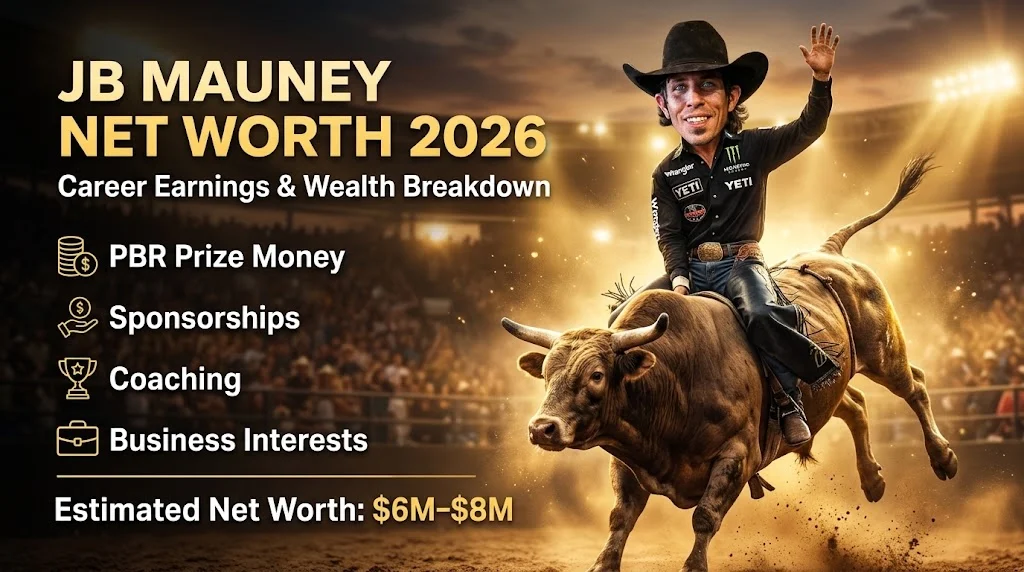
JB Mauney’s net worth in 2026 is cautiously estimated at $6 million to $8 million, based on his documented $7.4 million in PBR career earnings, other professional opportunities, and his post-retirement work in bull riding, although his personal assets and liabilities are not publicly verified.
JB Mauney built his reputation by doing something few professional bull riders could consistently manage: staying aboard some of the toughest bulls in the sport. Known as “The Dragon Slayer,” the American rider became a two-time Professional Bull Riders (PBR) World Champion and one of the highest-earning athletes in Western sports history. His career combined championship performances, major event victories, and a level of consistency that made him a recognizable name among rodeo fans.
Interest in JB Mauney net worth remains strong because his career offers an unusual example of financial success in a physically demanding sport. Unlike athletes in major team leagues, professional bull riders often earn through competition prize money, sponsorships, event appearances, and related opportunities. Their income can fluctuate significantly depending on results, health, and the ability to keep competing.
Mauney’s professional riding career ended after a serious neck injury in 2023, but his connection to the sport continued through coaching and other industry involvement. His official PBR career earnings provide a useful financial reference point. However, prize money is not the same as personal wealth. Taxes, travel, training, medical expenses, business costs, and private financial decisions all affect the amount an athlete ultimately retains.
Bio Data Table
| Field | Details |
|---|---|
| Full Name | James Burton Mauney |
| Known As | JB Mauney |
| Date of Birth | January 9, 1987 |
| Age as of 2026 | 39 years old |
| Place of Birth | Charlotte, North Carolina, United States |
| Nationality | American |
| Height | 5 feet 10 inches, according to PBR profile information |
| Weight | 140 pounds, according to PBR profile information |
| Health Conditions | Sustained a serious neck fracture in a 2023 bull riding accident; full medical history not publicly verified |
| Religion | Not publicly verified |
| Education | Not publicly verified |
| Sports / Profession / Industry | Former professional bull rider; coach; Western sports |
| Zodiac Sign | Capricorn |
| Marriage / Relationship Status | Married to Samantha Lyne Mauney |
| Children | Publicly reported to have children; complete family details are not necessary to establish his financial profile |
| Net Worth | Estimated at $6 million to $8 million in 2026; not officially confirmed |
| Social Media Accounts | Public social media presence; current verified account details should be checked directly |
| Still Alive | Yes |
| Famous For | Two PBR World Championships, 32 Premier Series event wins, and more than $7.4 million in PBR career earnings |
Who Is JB Mauney? Background & Early Life
James Burton Mauney was born on January 9, 1987, in Charlotte, North Carolina. He grew up in a region where rodeo and Western sports had a strong following, and he became interested in bull riding at a young age. His early involvement in the sport helped him develop the balance, strength, timing, and confidence required to compete against powerful bucking bulls.
Mauney’s interest was not simply recreational. He began riding as a child and progressed through junior competition before entering the professional ranks. His early achievements included winning the Southern Rodeo Association Junior All-Around title in 2002. He later won the association’s adult all-around title in 2004, demonstrating that he could compete successfully before reaching the highest level of professional bull riding.
In 2005, Mauney joined the Professional Bull Riders circuit. His arrival marked the beginning of a career that would eventually place him among the sport’s most successful competitors. He earned PBR Rookie of the Year honors in 2006, an early sign that he had the ability to compete with established riders.
His riding style helped distinguish him from many competitors. Mauney became known for choosing difficult bulls rather than always taking the safest available matchup. This approach contributed to his nickname, “The Dragon Slayer,” and helped build his reputation among fans and fellow riders.
The biggest breakthrough came in 2013, when he won his first PBR World Championship. He followed that achievement with another world title in 2015. Winning two championships in a sport where each ride carries a serious risk of injury established him as one of the most accomplished bull riders of his generation.
Mauney’s career was also defined by longevity. He qualified for the PBR World Finals 15 consecutive times from 2006 through 2020 and recorded 32 Premier Series event victories. He became the first rider in PBR history to pass $7 million in career earnings, a milestone that demonstrated the financial possibilities available to a competitor who combines elite performance with long-term participation.
His professional riding career ended in 2023 after a serious neck injury during a rodeo event in Idaho. The accident changed his professional direction, but it did not remove him from the sport. In 2024, he began a new chapter as head coach of the Oklahoma Wildcatters, a team in the PBR Teams league.
Mauney’s story is therefore not only about competition winnings. It is also about turning athletic achievement into a lasting position within the Western sports industry.
JB Mauney Net Worth 2026 Estimate
JB Mauney’s net worth in 2026 is estimated at $6 million to $8 million. This range is a cautious assessment based on his official PBR career earnings, his long professional career, and his continued involvement in bull riding after retirement. It is not an audited figure or a confirmed statement of his personal wealth.
One of the strongest financial reference points is Mauney’s official PBR career earnings of approximately $7,419,474.90. That total places him among the highest-earning competitors in Western sports history. It is also a documented competition-earnings figure, making it more useful than unsupported online estimates.
However, the $7.4 million figure should not be confused with his net worth. Competition earnings represent money won through professional events. They do not automatically account for taxes, travel, entry fees, equipment, training, medical expenses, insurance, agents, management, or other professional and personal costs.
His career also included opportunities beyond PBR prize money. Professional riders can receive sponsorship support, appearance fees, and income from other rodeo competitions. Mauney’s popularity and reputation may have helped him attract opportunities, but the exact value of his sponsorship agreements and outside earnings is not publicly verified.
His later work as a coach provides another professional connection to the sport. Coaching compensation and related arrangements are not publicly disclosed in a way that establishes his annual income. His involvement with Ultimate Bullfighters, an organization in which he has been identified as a founder and part owner, may also be relevant to his business interests. The value of that ownership has not been publicly established.
Why the Estimate Is Not the Same as Career Earnings
A professional athlete’s financial position involves several different measurements:
- Gross earnings: The total money generated before expenses and deductions.
- Career earnings: The cumulative income or prize money recorded over an athlete’s professional career.
- Prize money: Payments awarded for results in competitions.
- Salary or coaching compensation: Payments received for a defined role or service.
- Business revenue: Income generated by a company or organization before operating costs.
- Ownership income: Money received through a stake in a business or other asset.
- Personal net worth: The estimated value of an individual’s assets minus liabilities.
These categories should not be treated as interchangeable. A rider may earn millions in prize money over many years but retain a smaller amount after paying taxes, travel expenses, training costs, medical bills, and other obligations.
What Supports the $6 Million to $8 Million Range?
The estimate is supported primarily by Mauney’s documented PBR earnings and the scale of his career achievements. His long period at the top of the sport created opportunities for additional income, while his reputation may continue to support professional work after retirement.
The range also recognizes uncertainty. There is no publicly verified statement listing all his assets, debts, property holdings, investments, or private business interests. Without that information, a precise calculation would be misleading.
The estimate should therefore be understood as a reasonable editorial range, not a claim that Mauney has a confirmed amount of money in the bank.
Net Worth Growth Timeline
Before Fame
Before joining the PBR, Mauney was developing his abilities through junior and regional rodeo competition. His early titles in the Southern Rodeo Association showed that he was progressing beyond beginner-level participation.
During this stage, his income would have been less predictable than it became later. Junior and regional competition can offer prize money and recognition, but it does not necessarily provide a stable financial foundation. Travel, equipment, entry fees, and training may also create costs for young competitors and their families.
Mauney’s early achievements were financially important mainly because they helped create a path toward professional competition. The long-term value came from gaining experience and proving that he could compete at a higher level.
Breakthrough Phase
Mauney joined the PBR in 2005 and earned Rookie of the Year honors in 2006. This period marked the beginning of a more established professional income stream.
As he began competing at major events, his opportunities to earn prize money increased. Success in individual rounds and competitions could generate significant payments, while consistent performances helped him remain visible to fans, sponsors, and event organizers.
His 2009 World Finals performance was another important milestone. He became the first rider to record a qualified ride on all eight of his bulls at the event and earned a major share of the competition’s prize money. Achievements of this kind helped establish his reputation as a rider capable of performing under pressure.
The most significant breakthrough arrived in 2013, when he won his first PBR World Championship. The title came with a substantial championship reward and increased his standing in the sport. He won the championship again in 2015, confirming that his earlier success was not a one-season achievement.
Peak and Recent Years
Mauney’s peak years included championship victories, major event wins, and a steady accumulation of career prize money. He became the first PBR rider to pass $7 million in career earnings in 2016. His final documented PBR career total reached approximately $7.42 million.
His competitive record also included 32 Premier Series event wins, tying the record held by Justin McBride at the time. He recorded 538 qualified Premier Series rides, one of the highest totals in PBR history.
In September 2023, Mauney announced his retirement from professional bull riding after fracturing his neck in an accident at the Lewiston Round-Up in Idaho. The injury ended his riding career and removed competition prize money as a regular source of future income.
His transition into coaching gave him a new role in the same industry. In 2024, he became head coach of the Oklahoma Wildcatters. He has also been associated with the development of Ultimate Bullfighters. These activities show how an athlete can continue working in a sport after leaving competition, although the financial value of those roles is not publicly disclosed.
Main Sources of Income
Mauney’s wealth is closely connected to professional bull riding. His income history differs from that of athletes in major team sports because bull riders generally do not receive the same kind of long-term guaranteed salaries. Competition results, sponsorship arrangements, and opportunities within the rodeo industry play a larger role.
1. Professional Bull Riding Prize Money
Competition prize money was the foundation of Mauney’s professional earnings. During his career, he competed in PBR events where riders earned money based on their performances and results.
His documented PBR career earnings of approximately $7.42 million are the clearest public indicator of his success. He became the first rider in PBR history to cross the $7 million milestone, a distinction that helped define his financial reputation in Western sports.
Prize money is generally event-based rather than a guaranteed annual salary. A rider must qualify, compete, and perform well to collect significant payments. Even an established champion can experience periods with lower earnings because of injuries, unsuccessful rides, or changes in competition opportunities.
Mauney’s consistency and ability to win major events helped him build a substantial career total. His two world championships in 2013 and 2015 were particularly important milestones in that process.
2. Rodeo and Competition Earnings Outside Major PBR Events
Professional bull riders may compete in different events and rodeo settings throughout their careers. These competitions can provide additional prize money and help riders maintain their visibility beyond one organization or tour.
Mauney spent years competing at a high level and became one of the sport’s most recognizable athletes. It is reasonable to consider non-PBR competition opportunities as part of his broader career income. However, a complete verified total covering every event and payment is not publicly available.
The financial structure of rodeo competition can also vary. Some events offer substantial payouts, while others provide smaller awards. Travel, entry fees, equipment, and other costs must be considered when assessing the money a rider actually retains.
3. Sponsorships and Endorsements
Sponsorships can be important in professional bull riding because the sport has a dedicated audience connected to Western culture, ranching, rodeo, and outdoor lifestyles.
Successful riders may work with brands that sell apparel, boots, protective equipment, trucks, agricultural products, and other goods relevant to their audience. A rider’s competition record and public reputation can make these partnerships more valuable.
Mauney’s nickname, championship achievements, and recognizable riding style helped make him a prominent figure in the sport. Those qualities may have supported sponsorship and promotional opportunities during his career.
However, the complete list of his private sponsorship agreements and the amounts he received are not publicly verified. It would be inaccurate to assign him a specific annual endorsement income without reliable contract information.
4. Coaching and PBR Teams Involvement
After retiring from competition, Mauney moved into coaching. In 2024, he was appointed head coach of the Oklahoma Wildcatters, a team competing in the PBR Teams league.
This role represents a professional income opportunity outside direct competition. Coaching responsibilities may include preparing riders, evaluating performances, supporting team strategy, and helping athletes develop their skills.
His experience as a two-time world champion gives him practical knowledge that can be valuable to younger competitors. However, the terms of his coaching agreement and any salary or performance-related compensation have not been publicly verified.
The move into coaching also provides a way for Mauney to remain involved in the industry after his riding career ended. It may help preserve his professional profile and create opportunities in the sport over time.
5. Business Ownership and Ultimate Bullfighters
Mauney has been identified as a founder and part owner of Ultimate Bullfighters, an organization connected to freestyle bullfighting. This involvement is relevant because it shows that his professional interests have extended beyond competing as an individual rider.
Business ownership can create income through an organization’s operations, partnerships, events, and other commercial activity. However, company revenue is not the same as an owner’s personal income. Operating expenses, partner arrangements, reinvestment, and ownership percentages determine how much value may ultimately accrue to an individual.
The financial performance of Ultimate Bullfighters, Mauney’s exact ownership percentage, and the value of his stake are not publicly verified. It should therefore be treated as a potential business interest rather than a confirmed major contributor to his net worth.
Business Strategy Behind the Wealth
Mauney’s financial success was built primarily through athletic performance, reputation, and a long career in a sport where consistent success is difficult to maintain. His path also demonstrates how professional athletes can use their experience and public recognition to remain active in their industry after retirement.
Building a Recognizable Reputation
Mauney’s nickname, “The Dragon Slayer,” became closely associated with his willingness to take on difficult bulls. This identity helped distinguish him from other competitors and made his performances recognizable to fans.
In professional sports, reputation can create commercial value. A rider known for major victories and memorable performances may attract more attention from sponsors, event organizers, media outlets, and fans. That attention can support opportunities beyond prize money.
His reputation was not built only through publicity. It was supported by championship results, event victories, and a long record of competing against elite bulls.
Performance and Competitive Longevity
Mauney’s career lasted 18 years at the professional level, according to the National Cowboy and Western Heritage Museum’s recognition of his career. Maintaining a place among top competitors over an extended period allowed him to accumulate prize money across many seasons.
Longevity is especially important in bull riding because the sport carries a high risk of injury. A competitor who can remain active, qualify for major events, and continue winning has more opportunities to earn than someone whose career ends early.
Mauney’s record of 15 consecutive PBR World Finals qualifications from 2006 through 2020 reflects that sustained competitive presence.
Turning Experience Into a Second Career
Retirement from competition does not necessarily mean leaving the sport entirely. Mauney’s transition into coaching allowed him to use his experience in a different professional role.
A former champion may offer insight into riding technique, competition preparation, managing pressure, and understanding difficult bulls. These skills can be useful to a team and its athletes.
His involvement with the Oklahoma Wildcatters represents a shift from personal performance to helping a group of riders succeed. This is a practical way to extend a professional career when direct competition is no longer possible.
Business and Industry Connections
Mauney’s association with Ultimate Bullfighters also suggests an interest in the business side of Western sports. Organizations connected to bullfighting and rodeo can create opportunities through events, partnerships, audiences, and industry relationships.
Still, ownership should not be confused with guaranteed profit. A business can generate revenue while also facing operating costs and financial risks. Without public financial statements, the value of Mauney’s business interests cannot be calculated reliably.
Awards & Achievements and Financial Impact
Mauney’s competition record is central to understanding his estimated wealth. His awards and achievements helped establish his position in professional bull riding and contributed to his earning opportunities.
Two-Time PBR World Champion
Mauney won the PBR World Championship in 2013 and 2015. These titles represent the highest level of achievement in the organization and confirmed his status as one of the leading riders of his era.
World championships can affect an athlete’s financial position through prize money, recognition, sponsorship appeal, and future opportunities. A champion may become more attractive to event organizers and brands because of the visibility associated with winning.
Mauney’s two titles also strengthened his long-term reputation, which continued to matter after his retirement.
2006 PBR Rookie of the Year
Mauney earned PBR Rookie of the Year honors in 2006. The award recognized his strong start in the professional circuit and helped establish his standing among the sport’s rising competitors.
Early recognition can influence an athlete’s career by increasing attention from sponsors, fans, and event organizers. It can also provide momentum that supports future competition opportunities.
Two PBR World Finals Event Titles
Mauney won the PBR World Finals event in 2009 and 2013. His 2009 performance was particularly notable because he became the first rider to record a qualified ride on all eight of his bulls at the event.
The World Finals are among the most important events in professional bull riding. Strong results can bring substantial prize money and increase an athlete’s reputation within the sport.
32 Premier Series Event Wins
Mauney recorded 32 Premier Series event victories, tying the record held by two-time world champion Justin McBride. This achievement demonstrates the consistency required to succeed across multiple events and seasons.
A large number of event victories can increase total competition earnings while also strengthening a rider’s marketability. It can help create a recognizable legacy that supports future appearances and industry roles.
2025 Ring of Honor Recognition
In 2025, Mauney was named among the PBR Heroes & Legends inductees and received recognition through the Ring of Honor. This distinction acknowledged his contribution to professional bull riding after retirement.
Such recognition does not create a guaranteed financial payment, but it reinforces an athlete’s legacy. A respected reputation can support media appearances, public engagements, coaching opportunities, and long-term influence in the sport.
Bull Riding Hall of Fame Recognition
Mauney was inducted into the Bull Riding Hall of Fame in 2024. The honor recognized his achievements and lasting contribution to bull riding.
Hall of Fame recognition can increase an athlete’s historical significance and public visibility. Its financial impact is generally indirect, but it may help preserve opportunities connected to appearances, interviews, events, and the broader Western sports community.
Assets & Lifestyle
Mauney’s career earnings provide a clear indication of his success, but public information about his complete personal assets is limited. A responsible net worth analysis should avoid assigning values to property, vehicles, equipment, or investments without reliable evidence.
Real Estate
Mauney has been publicly associated with life and work in Texas, including a ranch setting in Stephenville where he has trained young bull riders. Reporting on his post-retirement life has described the ranch as a place where riders practice and develop their skills.
However, the exact ownership structure, current market value, mortgage obligations, and full property details are not publicly verified. A reported residence or training location should not automatically be treated as an asset owned entirely by Mauney.
Property can contribute to an athlete’s net worth, but its value depends on ownership, debt, land size, improvements, and local market conditions. Without verified records, it is not possible to calculate the amount of real estate wealth he may hold.
Cars and Luxury
Professional athletes may use trucks and other vehicles suited to their work and lifestyle. Bull riders often travel between events and may need practical transportation for equipment and outdoor activities.
However, specific claims about Mauney’s current vehicle collection, luxury purchases, or the total value of his personal possessions are not publicly verified. It would be misleading to include expensive vehicles in a net worth calculation without dependable confirmation.
Ranch and Business Assets
Mauney’s continued connection to bull riding includes access to training facilities and livestock environments. A ranch used for rider development can involve land, arenas, pens, equipment, and animal-care arrangements.
These resources may be business-related assets, personal property, leased facilities, or shared arrangements. Their ownership and financial value are not publicly established.
His association with Ultimate Bullfighters may also represent a business interest. Yet the value of that interest cannot be determined without reliable information about ownership percentages, assets, revenue, and liabilities.
Investments and Savings
Mauney’s long professional career may have allowed him to build savings or investments. However, his portfolio, financial accounts, retirement arrangements, and private investment holdings are not publicly verified.
A net worth estimate should recognize that such assets may exist without inventing their value. It should also account for possible debts and ongoing expenses rather than treating all career earnings as accumulated wealth.
Net Worth Comparison with Peers and the Western Sports Industry
Mauney’s financial achievements stand out in professional bull riding because his documented career earnings place him near the top of the sport’s historical money list. Comparing his record with other elite riders helps explain why he is often described as one of the most financially successful Western sports athletes.
| Bull Rider | Career Achievement | Reported PBR Career Earnings |
|---|---|---|
| José Vitor Leme | Two-time PBR World Champion | Approximately $8.7 million |
| J.B. Mauney | Two-time PBR World Champion | Approximately $7.42 million |
| Silvano Alves | Three-time PBR World Champion | Approximately $6.79 million |
| Guilherme Marchi | PBR World Champion | Approximately $5.34 million |
| Justin McBride | Two-time PBR World Champion | Approximately $5.19 million |
These figures represent recorded PBR career earnings, not personal net worth. They also reflect the standings available in the published PBR all-time earnings records and may change if records are updated or categories are reported differently.
Mauney Compared With José Vitor Leme
José Vitor Leme has surpassed Mauney on the PBR all-time career money list, with reported earnings of approximately $8.7 million. Leme’s results demonstrate how the financial ceiling in professional bull riding has continued to grow.
Mauney’s approximately $7.42 million remains a major achievement, especially considering the length of his career and the competitive environment in which he performed. The comparison shows that more recent riders can benefit from changes in event structures, prize pools, and opportunities across the sport.
Mauney Compared With Silvano Alves
Silvano Alves is another important comparison. He won three PBR World Championships and accumulated substantial career earnings during his time at the top of the sport.
Mauney and Alves competed during overlapping periods and were major rivals in the championship race. Their achievements demonstrate how elite bull riders can build significant career earnings through repeated success at major events.
Mauney Compared With Justin McBride
Justin McBride was one of the leading figures in PBR before Mauney’s peak years. He won two world championships and established a high standard for event victories and career earnings.
Mauney eventually tied McBride’s record of 32 Premier Series event wins. Their careers illustrate the importance of consistent performance, championship success, and longevity in a sport where competitors face considerable physical risks.
Why Career Earnings Comparisons Have Limits
A career earnings list is useful because it provides a measurable record of competition success. It does not reveal each rider’s personal expenses, sponsorship income, investments, debts, or business interests.
Two riders with similar prize money could have very different net worth figures depending on their spending, tax obligations, financial planning, and ownership arrangements. Peer comparisons should therefore be used to understand competitive earnings rather than to claim an exact ranking of personal wealth.
Controversies, Challenges & Financial Risks
Mauney’s career was defined more by competition and injuries than by publicly established financial controversies. However, professional bull riding carries several risks that can affect an athlete’s income and long-term financial position.
Serious Injury and Career Interruption
The most significant financial challenge in Mauney’s career was the serious neck injury he suffered in 2023. During the Lewiston Round-Up in Idaho, he was thrown by a bull named Arctic Assassin and fractured his neck.
The injury led to his retirement from professional bull riding. It brought an abrupt end to the competition income that had been central to his career.
For a professional rider, an injury can affect more than immediate prize money. It may prevent participation in future events, reduce sponsorship opportunities, create medical costs, and require a change in career direction. Mauney’s transition into coaching allowed him to remain involved in the sport, but coaching is a different income model from competing.
The Financial Cost of Bull Riding
Bull riding is a physically demanding profession with substantial risks. Riders may need protective equipment, travel arrangements, training, medical support, and recovery services.
Some expenses are recurring, while others arise unexpectedly after an accident. Medical treatment and rehabilitation can be particularly important for athletes who experience serious injuries.
The exact amount Mauney spent on these costs over his career is not publicly verified. Nevertheless, they are relevant when comparing his total prize money with his estimated personal wealth.
Inconsistent Competition Income
Unlike athletes who receive guaranteed salaries under long-term team contracts, bull riders generally depend heavily on competition results. A strong season can produce significant earnings, while a period of poor results or injury can reduce income sharply.
This makes financial planning especially important. Athletes must manage money earned during successful seasons while preparing for periods when they may not be able to compete.
Mauney’s long career and substantial prize money suggest that he had many opportunities to earn, but the exact financial decisions he made during those years remain private.
Sponsorship and Reputation Risks
Sponsorships can provide additional income, but agreements may depend on an athlete’s public image, performance, and continued relevance. A retirement or injury can change the type of promotional opportunities available.
Mauney’s reputation as a two-time world champion gives him lasting recognition in the Western sports community. His move into coaching also helps maintain his connection with fans and competitors. However, no specific future sponsorship income should be assumed without verified agreements.
Business and Operating Risks
Ownership or involvement in a sports organization can create opportunities, but businesses also face operating expenses, event costs, staffing requirements, and changes in audience demand.
Mauney’s association with Ultimate Bullfighters should not automatically be treated as a guaranteed source of profit. Its financial performance and his personal share of any income are not publicly verified.
There is no reliable basis for attributing unverified financial disputes or allegations to Mauney. His financial risks can be discussed through the documented realities of professional bull riding, his injury-related retirement, and the uncertainty surrounding private business arrangements.
Philanthropy & Social Impact
Mauney’s most visible contribution to the Western sports community comes through his influence on professional bull riding and his continued involvement in developing the next generation of competitors.
His career helped demonstrate the level of skill, discipline, and resilience required to succeed in the sport. His championship record and willingness to compete against difficult bulls made him a prominent figure for fans and aspiring riders.
As head coach of the Oklahoma Wildcatters, he became involved in helping professional riders prepare for team competition. His background gives him practical knowledge of the demands of the sport, from technique and preparation to managing the pressure of high-level events.
Mauney has also been associated with training young riders at his ranch. Mentoring and coaching can have a meaningful effect on a sport even when the financial value of that work is not publicly disclosed.
Specific charitable donations, fundraising totals, and long-term philanthropic commitments should not be claimed without reliable confirmation. Publicly verified philanthropy information is limited.
How JB Mauney Makes Money Outside Core Profession
Although Mauney is best known as a professional bull rider, his career after retirement shows how athletes can remain financially connected to their industry without competing.
Coaching and Team Leadership
His appointment as head coach of the Oklahoma Wildcatters in 2024 represents one of the clearest post-retirement professional roles. Coaching allows him to use his experience to help riders improve their performance and prepare for competition.
The position may provide compensation, but the exact salary and contract structure have not been publicly verified. It is therefore appropriate to recognize coaching as a professional activity without assigning it an invented annual value.
Ultimate Bullfighters
Mauney has been identified as a founder and part owner of Ultimate Bullfighters, an organization focused on freestyle bullfighting. This gives him a connection to the business and organizational side of Western sports.
A business interest can potentially generate value through events, partnerships, and other commercial activities. However, revenue does not automatically become personal income. Operating expenses, ownership shares, and reinvestment all influence what an owner may receive.
The current financial value of Mauney’s interest is not publicly verified.
Appearances and Media Opportunities
Recognized athletes may receive invitations to attend events, participate in interviews, appear at rodeos, or take part in sports-related media projects. Mauney’s reputation and career achievements make such opportunities possible.
However, specific appearance fees and media contract values are not publicly available. These should be considered potential professional opportunities rather than confirmed sources of a particular amount of income.
Industry Relationships and Mentoring
Mauney’s experience gives him professional credibility among riders, teams, event organizers, and fans. Relationships developed during a long career can support coaching, mentoring, and other work within the industry.
These activities may not generate the same kind of income as championship competition, but they can help an athlete maintain a professional role and continue contributing to the sport.
Future Net Worth Projection
Mauney’s financial outlook after 2026 will depend on his coaching career, business interests, investments, and ability to remain involved in Western sports. Since he has retired from professional riding, future competition prize money is no longer a realistic foundation for his personal income.
Coaching and Professional Leadership
His role with the Oklahoma Wildcatters provides a clear route for continued professional activity. If he remains involved in team competition, coaching may provide a more consistent income structure than the event-based earnings of his former riding career.
The value of this opportunity will depend on his responsibilities, contract terms, team performance, and the long-term development of the PBR Teams league.
Business Development
Mauney’s association with Ultimate Bullfighters may offer opportunities if the organization expands its events, audience, partnerships, or commercial operations. However, the financial effect on his personal wealth depends on the organization’s performance and his ownership share.
Without public financial records, it is not possible to project a specific business valuation or annual return.
Long-Term Value of His Reputation
Mauney’s two world championships, career earnings, and major competition records give him a lasting place in professional bull riding history. His reputation may continue to create opportunities through appearances, interviews, coaching, and industry events.
Recognition does not guarantee income, but it can help preserve professional relevance after retirement.
Risks to Future Wealth
His future financial position may be affected by business expenses, taxes, investment performance, medical needs, and changes in the Western sports market. The end of his riding career also means he no longer has the same opportunity to earn competition prize money.
A reasonable outlook is that Mauney may maintain or gradually build his wealth through coaching and other professional activities, provided those opportunities remain successful. However, any precise future net worth figure would be speculative.
The 2026 estimate of $6 million to $8 million should therefore be treated as a cautious range based on available career information, not a guaranteed financial baseline for future years.
Frequently Asked Questions
1. What is JB Mauney’s net worth in 2026?
JB Mauney’s net worth in 2026 is estimated at approximately $6 million to $8 million. The estimate considers his documented PBR career earnings of about $7.42 million, professional opportunities, and post-retirement work. His exact personal wealth has not been publicly confirmed.
2. How much money did JB Mauney earn in his bull riding career?
Official PBR records list Mauney’s career earnings at approximately $7,419,474.90. This made him the first rider in PBR history to surpass $7 million in career earnings. The figure represents recorded PBR earnings, not his total personal net worth.
3. How did JB Mauney make his money?
Mauney earned most of his professional income through bull riding competitions and prize money. Sponsorships, other rodeo opportunities, appearances, and business involvement may also have contributed. His exact income from private agreements is not publicly verified.
4. Is JB Mauney still a professional bull rider?
No. Mauney retired from professional bull riding in 2023 after suffering a serious neck injury at the Lewiston Round-Up in Idaho. He later moved into coaching and became head coach of the Oklahoma Wildcatters in 2024.
5. What does JB Mauney do after retirement?
After retirement, Mauney continued working in Western sports. He became head coach of the Oklahoma Wildcatters and has also been associated with Ultimate Bullfighters. These roles allow him to remain involved in the industry without returning to professional competition.
6. Is JB Mauney’s net worth officially confirmed?
No. His official PBR career earnings are documented, but his complete personal assets, debts, investments, and business interests are not publicly available. Net worth estimates are therefore approximations rather than confirmed financial statements.
Conclusion
JB Mauney net worth in 2026 is estimated at $6 million to $8 million, with his documented PBR career earnings of approximately $7.42 million providing the strongest financial reference point. His two PBR World Championships, 32 Premier Series event wins, and long professional career made him one of the most successful competitors in Western sports.
Competition prize money formed the foundation of his wealth, while sponsorship opportunities, other rodeo events, and later involvement in coaching and business may have added to his financial position. His retirement after a serious neck injury in 2023 ended his career as an active professional rider, but his role with the Oklahoma Wildcatters and his connection to Ultimate Bullfighters have kept him involved in the sport.
His career earnings should not be confused with personal net worth. Taxes, travel, equipment, medical costs, business expenses, investments, and liabilities all influence the final figure. Because his complete financial records are private, the estimate remains a range rather than an exact amount.
Mauney’s financial story is ultimately tied to sustained performance in a sport where success is difficult and injury risks are significant. His legacy goes beyond prize money: he remains one of the defining figures in modern professional bull riding.
Discover More Post:
- Pauly D Net Worth 2026 | From DJ Stardom to Building a …
- Crystal Hefner Net Worth 2026 | Inside Her Financial Journey …