
Quick Answer:
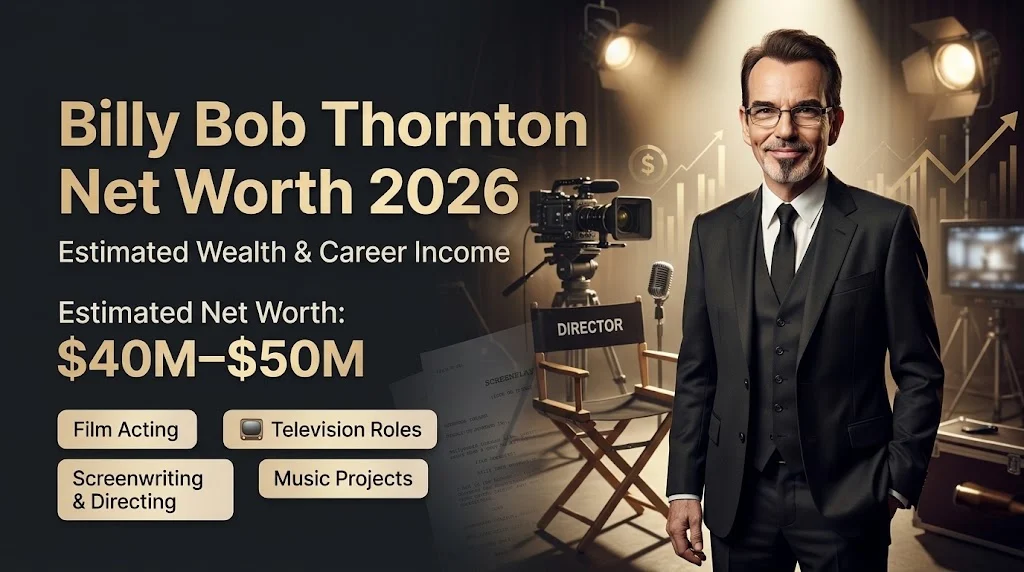
Billy Bob Thornton’s net worth in 2026 is estimated at approximately $40 million to $50 million, based on his decades-long acting career, screenwriting and directing work, television roles, and music projects, although his exact personal wealth has not been publicly verified.
Billy Bob Thornton has built a career that crosses several parts of the entertainment industry. He is known as an actor, filmmaker, screenwriter, director, and musician, with major projects ranging from Sling Blade and Armageddon to the television series Fargo and Landman. His ability to work in both film and television has helped him maintain a professional presence across different generations of audiences.
Interest in Billy Bob Thornton net worth in 2026 reflects curiosity about how a long career in Hollywood translates into personal wealth. His income has come from more than acting alone: writing, directing, producing, television contracts, and music have also contributed to his professional profile. However, publicly reported project earnings do not reveal his full financial position. Taxes, agents, managers, production costs, investments, and personal expenses all affect the amount an entertainer ultimately retains. Net worth estimates should therefore be viewed as approximations, not confirmed financial statements.
Bio Data Table
| Field | Details |
|---|---|
| Full Name | Billy Bob Thornton |
| Date of Birth | August 4, 1955 |
| Age as of 2026 | 71 years old |
| Place of Birth | Hot Springs, Arkansas, United States |
| Nationality | American |
| Height | Approximately 6 feet 0 inches; commonly reported |
| Weight | Not publicly verified |
| Health Conditions | Not publicly verified as a complete medical profile |
| Religion | Not publicly verified |
| Education | Attended Henderson State University; did not complete a degree |
| Profession / Industry | Actor, screenwriter, director, producer, and musician |
| Zodiac Sign | Leo |
| Marriage / Relationship Status | Married to Connie Angland |
| Children | Four children |
| Net Worth | Estimated at $40 million to $50 million in 2026; not officially confirmed |
| Social Media Accounts | Official personal social media accounts are not publicly verified |
| Still Alive | Yes |
| Famous For | Sling Blade, A Simple Plan, Armageddon, Monster’s Ball, Fargo, and Landman |
Who Is Billy Bob Thornton? Background & Early Life
Billy Bob Thornton was born on August 4, 1955, in Hot Springs, Arkansas. He grew up in the American South, an environment that later influenced parts of his creative identity and the characters he portrayed. His early life was far removed from the Hollywood industry, and his route into entertainment involved years of work before he became widely recognized.
Thornton attended Henderson State University in Arkansas, where he studied before leaving without completing a degree. He later moved toward California to pursue opportunities in acting and entertainment. Like many aspiring performers, he faced a difficult early period in which steady work and professional recognition were not guaranteed.
Before becoming a familiar Hollywood name, Thornton took on smaller acting opportunities and worked to develop his writing skills. He was interested not only in performing but also in shaping the stories and characters behind a production. That combination eventually became one of the defining features of his career.
His breakthrough came with Sling Blade, the 1996 film he wrote, directed, and starred in. The project demonstrated his ability to contribute to a film in several creative roles. It received widespread critical recognition and earned him an Academy Award for Best Adapted Screenplay. The film also helped establish him as a filmmaker with a distinct voice rather than simply another actor seeking leading roles.
Thornton’s career is therefore built on several related skills: acting, writing, directing, producing, and music. This variety has given him opportunities to earn income from different types of entertainment projects over a long period.
Billy Bob Thornton Net Worth 2026 Estimate
Billy Bob Thornton’s net worth in 2026 is estimated at $40 million to $50 million. This is an approximate range based on his long-running work in film and television, his writing and directing credits, and additional creative projects. It is not an officially confirmed figure, because Thornton has not made a complete public disclosure of his assets, liabilities, investments, or private financial arrangements.
His acting career is the most visible foundation of his wealth. Over several decades, he has appeared in studio films, independent productions, television dramas, and streaming-era projects. Actors with established reputations can earn income through leading roles, supporting performances, recurring television work, and negotiated project fees. The value of each engagement varies according to the production budget, the actor’s role, the length of the contract, and the terms negotiated.
Thornton’s work behind the camera is another important part of his financial profile. Writing and directing Sling Blade gave him recognition beyond acting and demonstrated that he could create and lead a project. Screenwriting compensation can involve an initial fee and, depending on contractual terms, additional payments or other forms of participation. Directing and producing may also provide separate compensation, although the specific terms of Thornton’s projects are not generally public.
Television has offered another route to continued professional income. His roles in Fargo, Goliath, and Landman brought him to audiences who may not have followed all of his earlier films. Television contracts can provide income over a defined production period, and recurring or leading roles may be especially valuable for established performers. However, the actual compensation for Thornton’s individual television projects is not publicly verified.
Music may contribute a smaller part of his overall earnings. Thornton has released music and performed with bands, but there is not enough verified financial information to assign a specific value to this activity.
How the Estimate Should Be Understood
A net worth estimate is not the same as a record of career earnings. The distinction matters because a successful actor may generate substantial gross income over many years while retaining only a portion after deductions and expenses.
- Gross earnings: The total amount generated by a project or engagement before expenses and deductions.
- Career earnings: Income received across an individual’s professional work over time, often reported without a complete breakdown of costs.
- Acting salary: Compensation negotiated for a particular film, television episode, or production.
- Writing and directing fees: Payments for creative services, which may be separate from acting compensation.
- Production revenue: Money generated by a film or television project before distribution costs, financing arrangements, and other deductions.
- Personal net worth: The estimated value of an individual’s assets after subtracting liabilities.
An actor’s financial obligations can include agent and manager commissions, legal and accounting services, taxes, public relations, travel, and other professional expenses. Film and television work can also be irregular, with periods of intense activity followed by quieter stretches. These factors make it difficult to calculate personal wealth from a list of screen credits.
Why Public Estimates May Differ
Different estimates may use different assumptions about acting salaries, property, investments, and income from older projects. Some may count reported gross compensation without adequately accounting for taxes or expenses. Others may include assets whose ownership or current value is uncertain.
The $40 million to $50 million range should therefore be treated as a cautious estimate for editorial purposes, not a verified statement of Thornton’s bank balance or total assets. Publicly verified information about his complete financial position is limited.
Net Worth Growth Timeline
Before Fame
Before becoming an established Hollywood actor, Thornton spent years pursuing opportunities and developing his craft. His early career did not begin with the large salaries associated with prominent film and television performers. Like many actors trying to establish themselves, he relied on smaller opportunities and continued building professional experience.
During this period, his income was likely less predictable than it became after his breakthrough. Acting work is often project-based, meaning that performers may receive payment for individual roles rather than a stable year-round salary. The exact amount Thornton earned during his early years is not publicly verified.
His decision to develop his writing skills was important to his eventual career direction. Rather than limiting himself to acting auditions, he worked toward creating material that could become a film. That effort ultimately produced Sling Blade, which changed his professional standing.
Breakthrough Phase
The release of Sling Blade in 1996 was a major turning point. Thornton wrote, directed, and starred in the film, giving him several creative responsibilities within one project. Its critical success brought him wider industry recognition and the Academy Award for Best Adapted Screenplay.
The film’s success helped create opportunities that were not necessarily available to him earlier. Greater visibility can improve an actor’s negotiating position and lead to more prominent roles. It can also make it easier for a writer or director to attract attention for future projects.
Thornton subsequently appeared in major productions such as U Turn, A Simple Plan, and Armageddon. These projects expanded his presence in Hollywood and placed him in a range of production environments, from independent dramas to large commercial films.
This phase likely marked a significant increase in his earning potential. However, individual salaries, profit participation, and contract details are not consistently available in public records. The financial impact can be assessed through career development, but exact income totals cannot be established.
Peak and Recent Years
Thornton continued working in film throughout the 2000s and 2010s, appearing in projects such as Monster’s Ball, Bad Santa, Friday Night Lights, and The Man Who Wasn’t There. His ability to move between comedy, drama, crime stories, and action-oriented productions helped keep his career varied.
Television became increasingly important to his public profile. His performance as Lorne Malvo in the first season of Fargo earned significant critical attention and a Golden Globe Award. He later starred in Goliath, a legal drama that ran for four seasons, and took on the leading role of Tommy Norris in Landman.
These television projects offered a different income structure from individual film roles. A series can involve a longer production schedule, multiple episodes, and recurring work across seasons. A leading role may also strengthen an actor’s position when negotiating future projects. Still, television salaries are determined by private contracts, and Thornton’s exact compensation has not been publicly verified.
His recent work demonstrates that his career remained active well beyond his original breakthrough. Rather than depending exclusively on nostalgia for earlier films, he has continued to take roles in new productions. This ongoing activity is a relevant factor when considering his estimated wealth in 2026.
Main Sources of Income
1. Film Acting
Film acting is one of the clearest foundations of Thornton’s professional earnings. His filmography includes independent films, major studio releases, comedies, thrillers, and dramas. Working across these categories has allowed him to maintain a broad professional profile.
Actors are generally paid according to negotiated agreements. A film’s budget, the actor’s role, their experience, production schedule, and the expected commercial profile of the project can all influence compensation. A leading role in a major production may have a different financial structure from a supporting role in an independent film.
Thornton’s long career and recognizable screen presence may have helped him secure a range of roles over time. However, his individual film salaries are not publicly verified in a complete record. It would be misleading to assign a fixed fee to every film or assume that a film’s box-office revenue went directly to him.
2. Television and Streaming Contracts
Television has become a significant part of Thornton’s later career. His performances in Fargo, Goliath, and Landman have introduced him to audiences through long-form storytelling.
Television compensation can be structured around episode fees, season agreements, recurring appearances, and other negotiated terms. A lead performer may also have a contract that reflects the length and demands of the production. The actual amount depends on the production company, distribution arrangement, role, and the actor’s agreement.
Thornton’s prominent television work likely contributes to his earning capacity, especially when a series attracts a substantial audience or continues across multiple seasons. Yet public reports do not provide a complete, independently verified account of his compensation from these shows.
3. Screenwriting Income
Thornton’s screenwriting work is an important part of his professional identity. Sling Blade remains his best-known writing achievement and earned him an Academy Award for Best Adapted Screenplay.
Screenwriters can receive compensation for writing a screenplay, revising material, or contributing to a project under negotiated agreements. Depending on the production and contract, payments may be structured in stages. Certain projects may also include additional compensation if specific conditions are met.
Writing can create opportunities that differ from acting alone. A performer who develops original material may have greater creative influence over a project and may be considered for additional roles behind the camera. However, creative control and financial ownership are not the same thing. Thornton’s precise contractual rights and earnings from individual scripts are not publicly verified.
4. Directing and Producing
Thornton’s work as a director adds another dimension to his career. Directing requires responsibility for the creative execution of a production, including performances, pacing, visual storytelling, and collaboration with department heads.
A director’s compensation is usually negotiated separately from an actor’s fee, although an individual may hold more than one role on the same project. A director who also writes or acts in a film may receive compensation under multiple agreements. This does not mean that the person automatically owns the film or receives all of its profits.
Thornton’s work on Sling Blade is the clearest example of his involvement in several parts of filmmaking. It helped establish his reputation as a multi-skilled creative professional. The financial terms of his directing and producing work are not publicly available in enough detail to calculate a separate total.
5. Music and Performance Projects
Music is another established interest in Thornton’s career. He has released albums and performed with musical groups, including The Boxmasters. His music work includes songwriting and live performance, giving him a creative outlet outside film and television.
Musicians can earn money through recorded music, live shows, and related performance activity. However, revenue depends on audience demand, distribution, touring arrangements, production costs, and contractual rights. There is no verified public breakdown showing how much Thornton has earned from music compared with acting or filmmaking.
Music should therefore be considered an additional professional activity, not assumed to be a major driver of his net worth.
6. Public Appearances and Other Entertainment Work
Established actors may receive fees for selected public appearances, interviews, industry events, and other professional engagements. They may also take part in promotional campaigns connected to a film or television project.
However, not every public appearance is paid, and promotional work is often included in a project’s broader publicity arrangements. Thornton’s private appearance fees and any ongoing commercial arrangements are not publicly verified. These categories should not be assigned a specific financial value without reliable evidence.
Business Strategy Behind the Wealth
Thornton’s career demonstrates the financial value of versatility in the entertainment industry. He has not relied on one type of role or one creative skill. Instead, he has moved between acting, writing, directing, television, and music, allowing him to pursue different professional opportunities over several decades.
Reputation and Creative Identity
A recognizable reputation can influence the projects offered to an actor. Thornton became known for performances that often combine dry humor, emotional restraint, and unconventional characters. This distinct screen presence has helped him work across genres without being associated with only one type of role.
His reputation as a writer and director also distinguishes him from performers whose work is limited to acting. The success of Sling Blade established his ability to develop and execute a creative project, strengthening his position within the film industry.
Career Diversification
Thornton’s move between film and television has been an important part of his professional strategy. Film projects can offer individual opportunities, while television series may provide work over longer production periods. Moving between the two formats can help an established performer remain visible as the entertainment business changes.
His music projects add another creative outlet, although their financial contribution is not publicly established. This range of work helps explain why his career should be assessed across several entertainment categories rather than through film salaries alone.
Long-Term Industry Relationships
Actors and filmmakers often develop professional relationships with directors, producers, studios, production companies, and fellow performers. These relationships can lead to future projects and make it easier to remain active in a competitive industry.
Thornton’s long career has involved work with established filmmakers and major entertainment productions. The specific financial value of those relationships cannot be measured from public information, but sustained industry connections can support professional continuity.
Balancing Creative Work and Commercial Projects
Thornton has appeared in both independent films and larger commercial productions. Independent projects may offer creative opportunities that differ from studio films, while larger productions can provide broader exposure. The financial arrangements vary significantly from one project to another.
This balance has allowed him to maintain a varied body of work. It also means that his financial history cannot be understood through box-office totals alone. A film’s commercial performance does not reveal the actor’s compensation, ownership rights, or personal profit.
Awards & Achievements and Financial Impact
Thornton’s awards and career achievements have strengthened his reputation as both a performer and a filmmaker. Recognition can influence an actor’s professional standing, although awards do not automatically translate into a fixed salary increase.
Academy Award for Sling Blade
Thornton won the Academy Award for Best Adapted Screenplay for Sling Blade. The film was especially important because he wrote, directed, and starred in it.
An Academy Award can increase professional visibility and help a filmmaker attract attention from studios, producers, and audiences. In Thornton’s case, the success of Sling Blade helped establish him as a creative force capable of working behind and in front of the camera.
The award’s financial impact is indirect. It may improve future opportunities and negotiating leverage, but it does not establish the amount of money he earned from the film or the value of his personal assets.
Golden Globe Award for Fargo
Thornton won a Golden Globe Award for Best Actor in a Miniseries or Television Film for his performance as Lorne Malvo in Fargo. The role introduced him to a new wave of television viewers and received substantial critical recognition.
Awards can help maintain an actor’s relevance and make their work more visible to casting teams and production companies. Recognition for a television performance may also support opportunities in other series and films.
Other Acting Recognition
Thornton has received further award nominations and industry recognition for his work in film and television. His performances in projects such as A Simple Plan and Monster’s Ball contributed to his reputation as a versatile dramatic actor.
His long list of credits is also an achievement in itself. Maintaining a career across changing industry trends requires adaptability, professional relationships, and continued audience interest. These factors may support earning potential, although they do not provide a direct measure of net worth.
Assets & Lifestyle
A celebrity’s lifestyle can attract public attention, but visible possessions do not provide a reliable measure of personal wealth. A meaningful net worth calculation requires information about ownership, market value, debt, and other financial obligations. Much of that information is private in Thornton’s case.
Real Estate
Public reporting has at times discussed property associated with Thornton, but a complete, current inventory of his real estate holdings is not publicly verified. A property report may identify a purchase or sale without revealing the full financial circumstances surrounding it.
The value of a home can change over time due to location, market conditions, renovations, and property demand. Mortgages, shared ownership, taxes, and transaction costs also affect the amount of equity an owner may hold.
For these reasons, it would be inappropriate to add an assumed property portfolio value to Thornton’s net worth without reliable information about current ownership and liabilities.
Cars and Luxury
Thornton’s public image is more closely associated with his acting and creative work than with a heavily publicized collection of luxury vehicles. Specific claims about his current cars, private aircraft, or other expensive possessions should not be treated as confirmed unless supported by reliable reporting.
An actor may spend money on travel, clothing, security, and personal services, but such expenses do not automatically indicate the value of their assets. Thornton’s complete collection of vehicles and luxury possessions is not publicly verified.
Fashion, Investments, and Business Assets
Thornton has appeared at film premieres, award ceremonies, and public events, but clothing seen at those events does not necessarily represent personal ownership. Outfits may be borrowed, provided by designers, or arranged through stylists.
His private investment portfolio and any substantial business ownership interests are not publicly verified. His established professional assets are more clearly connected to his creative reputation, experience, screenwriting work, and continuing opportunities in entertainment.
It is important not to confuse professional value with financial ownership. A person’s reputation can help them secure work, but it is not the same as a publicly measurable investment or business asset.
Net Worth Comparison with Peers and the Entertainment Industry
Comparing Thornton with other actors can provide context for his career, but celebrity net worth figures are estimates rather than audited financial statements. Actors with similar levels of recognition may have very different financial positions because of their project choices, contracts, investments, business interests, and spending patterns.
| Actor | Industry Connection | Career and Financial Context |
|---|---|---|
| Billy Bob Thornton | Film and television actor, writer, director | Known for Sling Blade, major film roles, and television projects including Fargo and Landman. |
| Sam Elliott | Film and television actor | Built a long career through film, television, and recognizable supporting and leading performances. |
| Jeff Bridges | Film and television actor | Known for decades of film work, major roles, and award-winning performances. |
| John Goodman | Film and television actor | Has worked extensively in cinema and television, including long-running and high-profile projects. |
These performers have different career histories and financial arrangements. Their public net worth estimates may also be calculated using different assumptions, so the figures should not be treated as directly comparable.
Thornton’s career stands out for combining acting with writing and directing. While some peers may be better known for a particular franchise, television series, or commercial role, Thornton’s professional profile includes both independent filmmaking and mainstream entertainment. That range is an important part of his financial story.
Controversies, Challenges & Financial Risks
A long career in entertainment brings financial uncertainty even for performers with major credits. Thornton’s net worth estimate should be considered in the context of the wider risks affecting actors, writers, and filmmakers.
Inconsistent Project Income
Most actors do not receive a continuous salary throughout their careers. Income depends on securing roles, completing projects, and negotiating contracts. Even established performers can experience periods with fewer projects or choose to take time away from work.
Thornton’s continued film and television activity helps demonstrate professional longevity, but no public record establishes that his income has been consistent every year.
Changing Film and Television Markets
The entertainment industry has changed substantially with the growth of streaming services, shifting studio strategies, and changing audience habits. Production budgets and the types of projects being commissioned can vary over time.
Actors may benefit from demand for experienced performers, but industry changes can also affect the number of available roles and the compensation offered. Thornton’s recent television work shows his ability to remain active in newer formats, although future opportunities cannot be guaranteed.
Professional Fees and Taxes
Agents, managers, lawyers, accountants, publicists, and other professionals may receive fees or commissions from an actor’s work. Taxes can also reduce the amount retained from gross compensation.
These deductions matter when estimating wealth. A reported acting fee should not be treated as an equivalent increase in net worth because the actor may have substantial expenses and obligations.
Production and Contractual Uncertainty
Film and television projects can face delays, budget changes, distribution challenges, or cancellation. Actors are generally paid according to their contracts, but the financial outcome of a project may differ from initial expectations.
Writing, directing, and producing can bring additional opportunities, but they may also involve responsibilities and risks that are different from acting alone. The terms of Thornton’s private contracts are not publicly verified, so claims about specific financial disputes or losses should not be made without evidence.
Reputation and Career Longevity
An actor’s reputation can affect casting opportunities and audience interest. Public controversies or professional disagreements may sometimes influence a performer’s career, but unsupported claims should not be used to explain financial changes.
Thornton’s career has continued across multiple decades and entertainment formats. Future earnings will still depend on the projects he accepts, industry demand, and his ability and willingness to remain professionally active.
Philanthropy & Social Impact
Billy Bob Thornton’s public identity is primarily associated with acting, filmmaking, screenwriting, and music. His work has contributed to American film and television through distinctive performances and creative projects, particularly Sling Blade and Fargo.
Thornton has also been involved in public conversations and appearances connected to entertainment and cultural causes. However, a complete, independently verified record of his charitable donations, ongoing commitments, and the financial value of any philanthropy is not publicly available.
Publicly verified philanthropy information is limited. Specific donation amounts or long-term charitable commitments should not be attributed to him without reliable documentation.
His broader cultural contribution is easier to identify. Through his work as an actor, writer, and director, Thornton has helped create memorable characters and films that remain part of American entertainment. His career also demonstrates how performers can expand their professional influence by developing skills behind the camera.
How Billy Bob Thornton Makes Money Outside His Core Profession
Although acting is the most visible part of Thornton’s career, he has several professional activities beyond performing on screen. These additional areas are relevant to understanding his overall earning potential, but their individual financial contributions are not publicly disclosed.
Screenwriting and Creative Development
Thornton’s screenwriting work is a major part of his professional identity. Sling Blade established his reputation as a writer and demonstrated that he could develop a story as well as perform in it.
Screenwriting can generate income through writing agreements, revisions, and other negotiated arrangements. A writer’s compensation depends on the project, contract, production structure, and any applicable rights. Thornton’s exact writing income is not publicly verified.
Directing and Producing
Directing allows Thornton to contribute to the creative leadership of a film. When an entertainer works as an actor, writer, and director on the same production, they may receive separate compensation for different responsibilities.
Producing can also involve creative and organizational work, although producer credits do not automatically indicate ownership of a film or a share of its profits. Thornton’s specific ownership interests and producer compensation are not publicly verified.
Music and Live Performances
Thornton’s involvement in music provides an additional professional outlet. His work with The Boxmasters and his solo music releases demonstrate that music has remained part of his creative life.
Potential income can come from recorded music, songwriting, and performances. However, the commercial scale of this work and its contribution to his total wealth are not publicly verified.
Interviews and Public Appearances
Established performers may receive compensation for selected appearances, speaking engagements, and industry events. They may also participate in promotional activities connected to film and television projects.
It is not possible to assume that every appearance generates a separate fee. Some are part of a production’s promotional obligations, while others may be unpaid. Thornton’s private appearance fees and related commercial arrangements are not publicly verified.
Investments and Other Private Assets
Thornton may hold financial assets outside entertainment, but his complete investment portfolio is not publicly disclosed. There is insufficient verified information to assign a specific value to private investments, business interests, or other non-entertainment income.
His additional income should therefore be assessed through confirmed professional activities rather than assumptions about undisclosed businesses.
Future Net Worth Projection
Billy Bob Thornton’s financial outlook beyond 2026 will depend on his continued involvement in film and television, the demand for experienced performers, and his personal financial decisions. His established reputation gives him a professional foundation, but future income cannot be guaranteed.
Continued Television Opportunities
Thornton’s role in Landman has brought him renewed attention among television audiences. If he continues working in successful series, television contracts could remain an important part of his future earnings.
A leading television role may provide a defined period of paid work and strengthen an actor’s position for future projects. However, a series’ continuation, production schedule, and contract terms are determined by the companies involved. Future compensation should not be estimated without reliable information.
Film and Independent Projects
Thornton’s background in both mainstream and independent filmmaking may give him opportunities across different types of productions. His reputation as an actor, writer, and director could support future work in projects that value experienced performers and distinctive creative voices.
Independent projects may offer different creative opportunities from major studio productions, but their financial arrangements can vary widely. The commercial success of a film does not automatically determine how much its actors or creative team receive.
Writing and Directing Work
Further writing or directing projects could add to Thornton’s professional income. His earlier success with Sling Blade established a strong creative credential, but it does not guarantee that future projects will generate comparable financial returns.
Any additional work behind the camera would depend on project development, financing, production schedules, and contractual arrangements.
Overall Financial Outlook
Thornton’s long career and continuing presence in entertainment provide reasons to expect that he may retain significant earning opportunities. However, changes in the film and television market, professional expenses, taxes, and private investment performance could affect his overall wealth.
The estimated $40 million to $50 million range for 2026 should not be interpreted as a guaranteed foundation for future growth. Without verified information about assets and liabilities, a precise projection would be speculative.
Frequently Asked Questions
1. What is Billy Bob Thornton’s net worth in 2026?
Billy Bob Thornton’s net worth is estimated at approximately $40 million to $50 million in 2026. The estimate reflects his long career in film and television, screenwriting, directing, and music. His exact personal wealth has not been publicly confirmed.
2. How did Billy Bob Thornton make his money?
Thornton built his wealth primarily through acting in films and television productions. Screenwriting, directing, producing, and music have also contributed to his professional career. The exact amount earned from each activity is not publicly verified.
3. How much did Billy Bob Thornton earn from Sling Blade?
Thornton wrote, directed, and starred in Sling Blade, which became a major milestone in his career and earned him an Academy Award for Best Adapted Screenplay. His exact compensation and total personal earnings from the film are not publicly verified.
4. Does Billy Bob Thornton earn money from television?
Yes. Television acting is an established part of his career. His prominent roles include Fargo, Goliath, and Landman. However, the exact salaries and contractual details for these productions have not been publicly verified.
5. Is Billy Bob Thornton still married?
Billy Bob Thornton is married to Connie Angland. They married in 2014. Thornton has four children. These family details are separate from his financial estimate, and no verified public information establishes the value of any shared assets or private financial arrangements.
6. Is Billy Bob Thornton’s net worth officially confirmed?
No. The estimated $40 million to $50 million figure is not an officially confirmed personal financial statement. Public information about his career provides context, but his complete assets, liabilities, investments, and expenses are not publicly available.
Conclusion
Billy Bob Thornton net worth in 2026 is estimated at $40 million to $50 million, reflecting decades of work as an actor, screenwriter, director, producer, and musician. His success with Sling Blade, his performances in major films, and his television roles in Fargo, Goliath, and Landman have helped establish his long-term position in the entertainment industry.
Acting remains the most visible source of his professional earnings, while writing, directing, and music add further dimensions to his career. His ability to work in both film and television has helped him remain relevant across changing entertainment formats.
However, career earnings are not the same as personal wealth. Taxes, professional fees, living expenses, investments, contractual arrangements, and liabilities all influence an individual’s final financial position. Since Thornton’s complete financial records are not publicly available, the estimate should be treated as an informed approximation rather than a confirmed figure.
Discover More Post:
- Pauly D Net Worth 2026 | From DJ Stardom to Building a …
- Crystal Hefner Net Worth 2026 | Inside Her Financial Journey …